The lake doubles the sunset and aims it at your guests. See why indoor reception photos blow out and how smart blinds and timing keep the glow flattering.
Most people think of sunset as one light source. On the water, it is two. The sun sits low in the sky, and the lake throws a second, very bright copy of it straight through the windows at eye level.
That bounced light does not fall from above like a ceiling lamp. It comes in flat and sideways, the exact angle that hits faces, wine glasses, and camera lenses. A roof overhang cannot stop it, because it skims across the water and slips in under the window frame.
Inside a reception room, you feel it before you see it. Guests squint during toasts. The white dress glows. The wall behind the head table goes dark next to a window that looks like a light box. No camera can hold all of that at once.
Leave the light alone, and you will spot these problems in your gallery:
Quick answer: Sunset ruins indoor lakeside wedding photos because low sun reflects off the water and floods the room with flat, intense light. That light is far brighter than the room lighting. A camera can expose for the window or for the faces, but not for both in the same frame.
Your phone fooled you. Modern phones snap several photos at once and blend them, so the window and the room both look balanced. A wedding photographer shooting moving people at a fast shutter speed cannot lean on that trick for every frame. Home sellers run into the same gap, where listing photo slat angles can make a room look nothing like it does in person. Your tour photo was a best case. Your first dance is the real test.
Light on the water changes fast in the last two hours of the day. Here is how a typical evening plays out in a lake-facing room.
The sun is still fairly high, and its light mostly lands on the floor. This is a calm time for cocktails, family portraits by the windows, and detail shots of the tables.
Roughly 90 to 30 minutes before sunset, the sun's reflection off the lake is at its strongest and lowest. This is when toasts, grand entrances, and cake cutting most often get scheduled, and it is the worst time for them in an unshaded room.
In the last half hour, the light softens and warms, and the reflection breaks into ripples instead of one hard beam. With the windows partly shaded, this is the most flattering light of the whole day.
Right after sunset, the sky turns deep blue and the room lights take over. The windows finally match the inside brightness, and photographers love it for wide shots that show both the party and the view.
The catch is that these times move around a lot. Sunset on Lake Conroe can land close to three hours apart between December and June, which is why planning with the lakeside calendar in mind keeps your big moments out of the glare.
Curtains give you two choices. Open means glare. Closed means you lose the view and the room feels like a basement. Neither works for a wedding.
Slatted blinds offer something better: angle. Tilted upward, the slats of well-made wood blinds catch the low reflected light and bounce it toward the ceiling, which spreads soft light back down over the room. Guests still see slices of the lake, and faces get gentle, even light instead of a spotlight from the side.
Wood slats do this especially well. They are thicker than most vinyl or metal styles, so they block more light per tilt, and their warm tone takes the harsh edge off the sun. Many hosts want that soft glow at home after an event, often starting by comparing ranked online wood blinds sellers so they can recreate it in their living rooms.
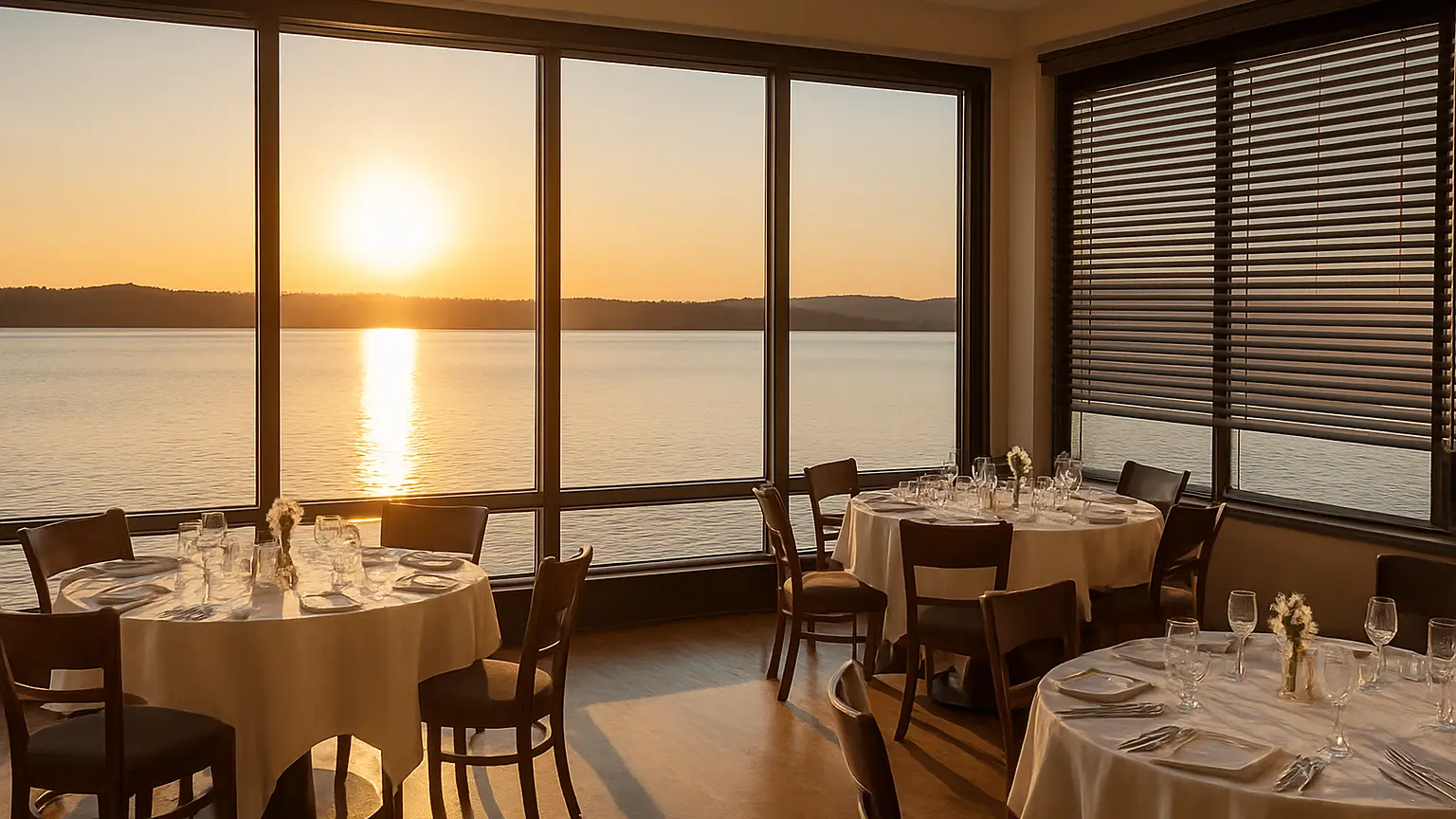
At La Torretta, managing the windows is part of the event plan, not an afterthought. The banquet team treats the blinds a bit like a stage crew treats lighting cues.
"We walk the room at the same time of day as the reception, a week or two out," says Marisa Delgado, events director at the resort. "We note where the hot spots land, which tables catch the reflection, and where the photographer will stand for the toasts. Then we set a plan for the blinds that changes as the sun drops."
That plan usually follows a few simple moves:
Material matters here too. "Wood slats are the closest thing to a dimmer switch for daylight. You are not fighting the sun, you are steering it," says Daniel Whitaker, senior window treatment specialist at Blinds Chalet. "A small change in tilt can cut the brightest glare while still letting guests see outside."
Blinds handle the room. Timing handles the people. Move toasts and the first dance either before the glare window or into golden hour proper. Schedule dinner service during the harshest stretch, when guests are seated and looking at their plates, not at a camera. Save the grand exit or sparkler send-off for blue hour, when the sky does the work.
Share the sunset time and the blind schedule with your photographer ahead of the day. A good photographer will pick a shooting spot with the light behind or beside them, never straight into it.
Not at all. Step outside for them instead. Ten minutes on the shore in golden hour gives you the warm, glowing portraits you have seen online, and the quietest stretch of shoreline is often where the most asked-about photos happen.
Tilted slats keep strips of the view visible, so the lake stays part of the room. Before guests arrive, staff also dust every slat, a step that hotel housekeeping often misses and one that matters when backlight makes every speck glow. Guests notice the comfort far more than the shade.
Less so. Clouds soften the reflection, so the team may leave blinds wide open. That is why the final plan is set on the day, based on the actual sky.
Yes. Rehearsal dinners, award nights, and company dinners all suffer from the same glare, and a bright window can wash out presentation slides completely.
Lakeside sunsets are beautiful because the water doubles the light, and that same doubling floods a reception room with glare that blows out windows, darkens faces, and splits skin tones in half. Phones hide the problem on tours, but professional cameras catch all of it on the big day.
The fix is simple and calm: slatted blinds tilted to steer the light, adjusted in stages as the sun drops, and a schedule that keeps key moments clear of the harshest stretch. Add a short golden-hour walk outside and a wide-open room at blue hour. Your guests stay comfortable, your photographer stays happy, and the lake shows up in your photos as the view you fell in love with.